June 12, 2026 | Post By BROZ
The Future of Digital Design Firms in an AI-Driven World
Let’s not sugarcoat it: AI has already changed design. The question isn’t whether your firm needs to adapt — it’s whether you’ll be the one leading the shift or scrambling to catch up when a client asks why your competitor delivered a polished brand system in three days.
But here’s the thing most panic-driven think pieces miss: AI doesn’t flatten design. It raises the floor. And that’s actually great news for firms that know what they’re doing.
The Commodity Trap (and How to Escape It)
The first casualty of AI in design? Low-differentiation execution work. Wireframes that follow a template. Stock-adjacent illustration. Copy-paste landing pages with a new logo dropped in. If your pitch relied on “we make things look good,” you’re selling something a $30/month tool now does in twenty minutes.
This isn’t new territory. The same disruption hit print shops when desktop publishing arrived. Photographers when smartphones got good. Animators when motion templates hit the market. The firms that survived each of those waves did it the same way: they moved up the value chain.
The firms that will thrive in the next five years aren’t the ones adding “AI-powered” to their service list as a selling point. They’re the ones using AI to free up space — mental space, calendar space, budget space — for the work that actually requires a human being to think.
What AI is Actually Good At
It’s worth being specific here, because the hype runs in both directions.
AI is genuinely excellent at:
- Generating variations fast — 40 color palette explorations in the time it used to take to do 5
- First-draft copywriting that gets to “good enough to react to” instantly
- Translating rough concepts into visual mockups before a single pixel has been lovingly pushed
- Pattern recognition — surfacing what’s working across a client’s existing visual library
- Accessibility checks, contrast ratios, responsive behavior testing
- Documentation, spec sheets, style guide drafts
AI is genuinely bad at:
- Knowing what a specific client actually needs to feel understood
- Making the call that breaks the brief in exactly the right way
- Navigating the politics of a rebrand when half the leadership team is emotionally attached to a logo from 2009
- Cultural nuance — the difference between bold and tone-deaf
- Strategic patience: knowing when not to ship something yet
The firms that understand this distinction aren’t threatened by AI. They’re using it as a force multiplier on the things they’re already good at.
The New Shape of a Design Team
Here’s what a forward-looking digital design firm looks like in 2026:
Smaller, sharper, senior-heavy. Junior roles that were primarily execution-focused are being replaced — not by AI, but by senior practitioners who use AI to do what used to take a team of five. This isn’t just an efficiency play. It’s a quality play. Clients are getting fewer handoffs, more consistent vision, and faster turnaround.
Deeply embedded strategists. The most valuable person in a design firm right now isn’t the best visual designer. It’s the person who can sit in a client meeting, understand what they’re actually afraid of, and translate that into a creative brief that an AI-assisted team can execute against in days, not months.
Systems thinkers over decorators. AI can produce a beautiful one-off execution. What it can’t do is build a design system that holds together across 14 touchpoints, two product lines, and a rebrand three years from now. That’s architecture work. It requires judgment, foresight, and someone willing to make hard decisions about consistency vs. flexibility. That’s a human job.
The Ethics Problem Nobody’s Talking About Enough
When you use AI to generate visual work, a few hard questions come with it — and clients are starting to ask them.
Whose aesthetic is it? Generative models are trained on existing work. A lot of that work was made by designers who didn’t consent to it being used as training data. How a firm answers this question — publicly, in contracts, in pitches — is going to matter more and more.
What do you disclose? Some clients don’t care. Some care a lot. The firms building lasting client relationships are the ones being proactive about this conversation rather than hiding behind vague deliverable language.
Is the work actually original? “AI-assisted” means something very different depending on whether a human designer shaped, rejected, and refined the outputs — or just accepted the first generation that looked close enough.
The firms with staying power will have a clear position here, not because it’s good PR, but because their work will reflect it.
Positioning for What’s Coming
If you run a digital design firm, or you’re thinking about building one, here’s the practical version of everything above:
Stop competing on speed and price. You will lose that race. Someone will always have a faster tool, a lower cost base, or a more aggressive offer. Compete on insight, relationships, and the ability to make the right call under ambiguity.
Build proprietary process. The firms that will command premium rates aren’t the ones with the best AI subscriptions — those are table stakes. They’re the ones with a repeatable, defensible method for getting clients from confusion to clarity. That process is IP. Document it. Sell it.
Invest in taste. This sounds fuzzy, but it’s one of the most defensible assets a design firm has. Taste is judgment accumulated over time — knowing what works, why it works, and when to break the rules. AI doesn’t have taste. It has pattern matching. The gap between those two things is where great design firms live.
Get loud about your point of view. If your firm doesn’t have a perspective on AI in design, you’ll be defined by someone else’s. Write about it. Build things that show it. Let clients know where you stand before they have to ask.
The Long View
The design firms that last another decade won’t be the ones that used AI earliest. They’ll be the ones that understood why design matters — that it’s ultimately about helping people make sense of the world, solve problems, feel seen by a product or brand — and found new ways to do that work better than before.
AI is a tool. A remarkably powerful one. But a tool in service of something, not a replacement for it.
The future belongs to the firms that stay clear on what they’re actually in the business of doing.
And it’s not making things look good.
Want more takes on design, technology, and building creative businesses? Head back to brozknows.com for more.

RECENT DESIGN PROJECTS
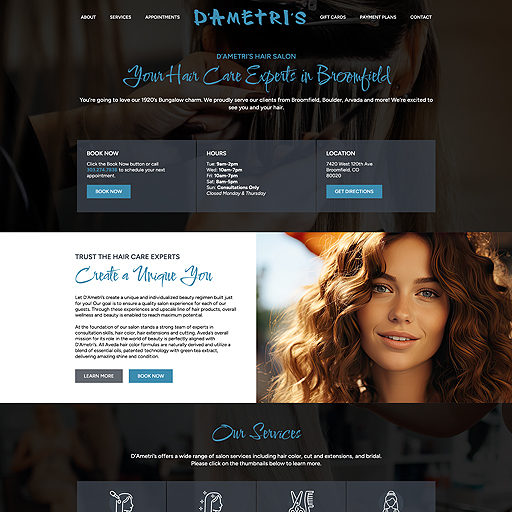
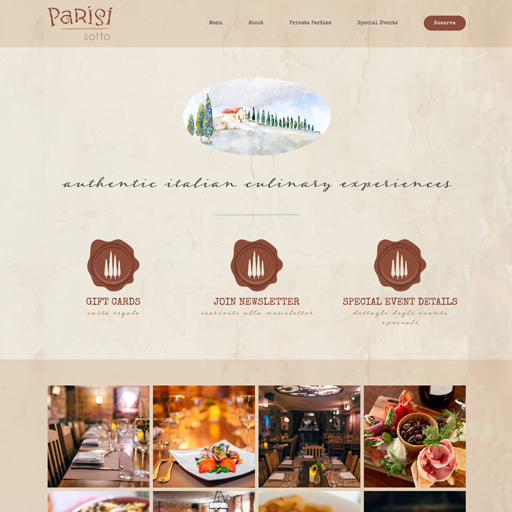
Click on the thumbnails below to preview Broz’s recent completed design projects.
Le Petit Bijou Azur


Sitka Bazaar